

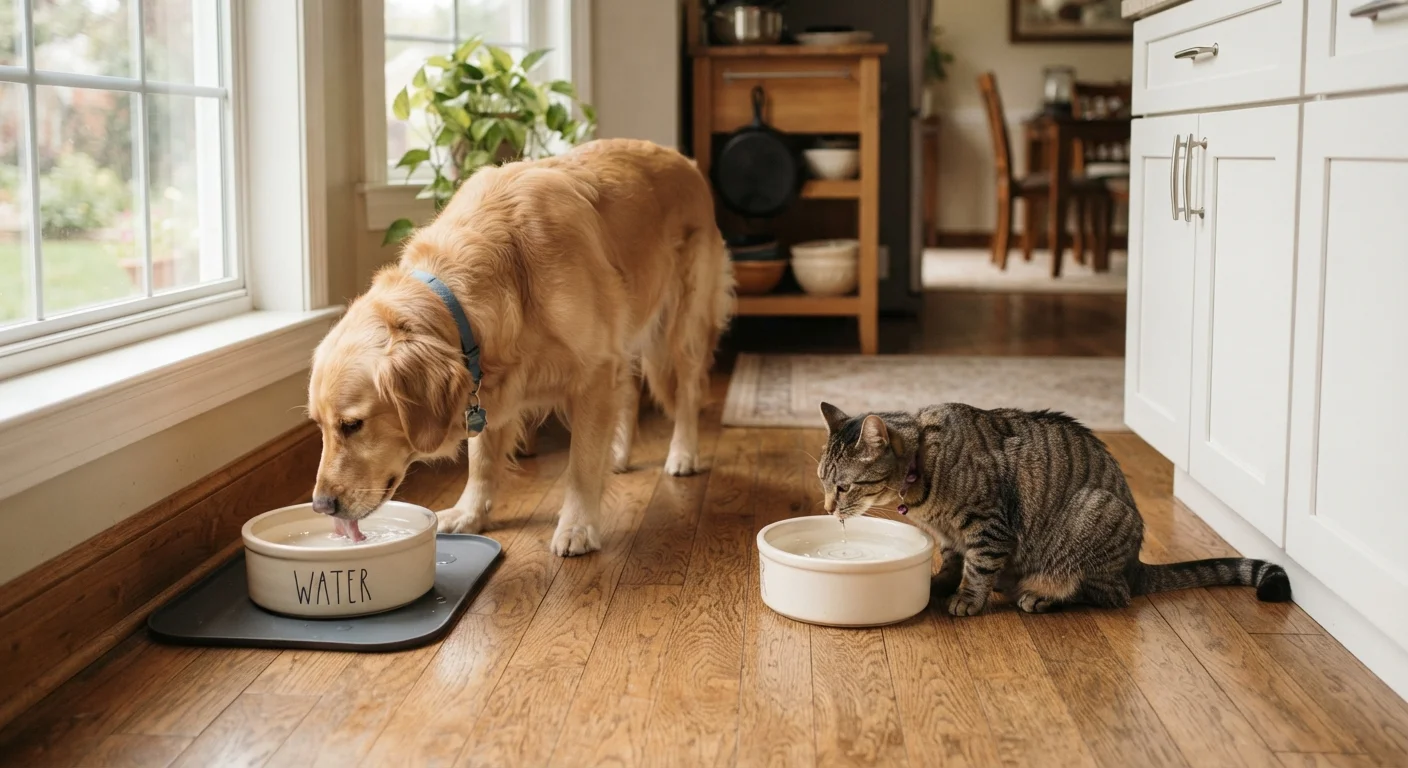
Key Takeaways
- Dogs generally need about 1 ounce of water per pound of body weight per day; cats need less due to moisture from wet food.
- Drinking far more than normal - polydipsia - can be an early sign of diabetes, kidney disease, or Cushing's disease.
- Drinking too little water raises the risk of urinary tract problems and dangerous dehydration.
- Changes in thirst that persist for more than a day or two warrant a veterinary evaluation.
- Diet type, activity level, and weather all influence how much a healthy pet drinks.
- Tracking your pet's baseline water intake makes it much easier to notice meaningful changes.
Abnormal Pet Water Intake
Abnormal water intake in pets refers to drinking significantly more or less than what is considered healthy for their species, size, and diet. Both extremes can signal underlying medical conditions rather than simple preference. Recognizing what's normal for your individual pet is the first step to catching problems early.
Veterinarians use the terms polydipsia (excessive thirst) and oligodipsia (reduced thirst) to describe clinically significant deviations in water consumption, typically assessed alongside urine output and blood or urine tests.
What Normal Water Intake Looks Like
Water consumption in pets isn't one-size-fits-all. Species, body weight, diet type, activity level, and ambient temperature all influence how much a healthy animal should drink each day.
For dogs, a commonly cited guideline from veterinary sources is approximately 1 ounce of water per pound of body weight per day. A 30-pound dog would therefore consume roughly 30 ounces - about 4 cups - under normal conditions. For cats, daily water needs are generally lower, partly because cats evolved from desert-dwelling ancestors with naturally concentrated urine. However, cats eating primarily dry kibble need to compensate through drinking, making adequate water access especially important for them.
Diet is one of the biggest variables. Wet food contains roughly 70-80% moisture, while dry kibble is closer to 10%. A cat or dog eating canned food will drink noticeably less from the bowl without anything being wrong. Understanding your pet's baseline - their normal amount on their normal diet - gives you a meaningful reference point. As part of a broader wellness approach, consider incorporating hydration checks into your monthly at-home pet wellness routine.
~1 oz/lb
Daily water need per pound of body weight in dogs
This general guideline is widely referenced in veterinary practice, though individual needs vary with diet and activity.
70-80%
Moisture content in typical wet pet food
Pets eating wet food consume significantly more water through their meals, reducing how much they drink from the bowl.
3 in 10
Cats estimated to develop chronic kidney disease in their lifetime
Feline chronic kidney disease is one of the most common causes of increased thirst and urination in older cats, according to veterinary literature.
Too Much Water: When Increased Thirst Is a Red Flag
Polydipsia - drinking significantly more than usual - is one of the more reliable early warning signs that something is medically wrong. The challenge is that it can creep up gradually, making it easy to miss.
Several conditions are commonly associated with increased thirst in pets:
- Diabetes mellitus: Excess glucose in the bloodstream pulls water into the urine, causing pets to drink heavily to compensate. Increased urination typically accompanies the thirst.
- Chronic kidney disease: Damaged kidneys lose the ability to concentrate urine efficiently, so pets must drink more to stay hydrated. This is particularly common in older cats.
- Cushing's disease (hyperadrenocorticism): Overproduction of cortisol leads to dramatic increases in thirst and urination in dogs.
- Liver disease and certain infections: These can also disrupt the body's fluid regulation mechanisms.
- Medications: Corticosteroids and some diuretics reliably cause increased water intake as a side effect.
If your pet is emptying the water bowl far faster than usual, or you're noticing more frequent trips outside or to the litter box, don't wait to see if it resolves. These signs deserve prompt veterinary attention - something our guide to warning signs that warrant a vet visit explores in more depth.
Track Your Pet's Daily Water Intake
Fill your pet's water bowl with a measured amount each morning and check what remains at the same time each evening. After a week, you'll have a reliable baseline for what's normal. This simple habit makes it much easier to notice meaningful changes - especially in pets with chronic conditions or those entering their senior years.
Too Little Water: The Quieter Risk
While excessive drinking tends to catch owners' attention, inadequate water intake is an equally serious concern - and often a quieter one. Cats in particular are prone to low-grade chronic dehydration, which over time can contribute to urinary tract problems including crystals, blockages, and kidney stress.
Signs that a pet may not be drinking enough include:
- Dry or sticky gums instead of moist, slick tissue
- Skin that doesn't snap back quickly when gently pinched (reduced skin turgor)
- Decreased urine output or unusually concentrated, dark-colored urine
- Lethargy and reduced appetite, which often accompany dehydration
Some pets are simply reluctant drinkers by nature. Others may avoid a bowl that's near their food (cats, especially, prefer these to be separated) or dislike the taste of tap water in certain municipalities. Water fountains, filtered water, or additional water stations around the home are strategies some owners find helpful - though any persistent reluctance to drink should still be evaluated by a vet to rule out medical causes such as nausea, oral pain, or systemic illness.
Oral discomfort is a frequently overlooked reason pets avoid drinking - something covered in our article on dental disease in pets.
Older Pets and Changing Hydration Needs
As pets age, kidney function naturally declines and the risk of conditions associated with abnormal thirst - chronic kidney disease, diabetes, hyperthyroidism in cats - increases significantly. For this reason, water intake monitoring becomes increasingly important in senior animals.
Older pets may also have reduced thirst perception, meaning they don't always drink as much as their bodies need even when mildly dehydrated. Veterinarians often recommend more frequent wellness visits and routine bloodwork for senior pets precisely because subtle changes in organ function can appear in lab results before obvious symptoms emerge.
Routine Bloodwork Catches Changes Early
Many conditions that alter thirst - including kidney disease and diabetes - can be detected through routine blood and urine panels before symptoms become obvious. Veterinarians often recommend annual wellness bloodwork for adult pets and twice-yearly testing for those over seven. Early detection consistently allows for more effective management.
Health monitoring for senior pets requires a different approach than for younger animals, with thirst and urination patterns being key data points at every checkup. Building hydration awareness into your broader everyday care routine is one of the most practical things an owner can do.
This article is for general educational purposes only and is not a substitute for professional veterinary advice. If you are concerned about changes in your pet's water intake or overall health, consult a licensed veterinarian.