

Key Takeaways
- Perennials return each year from established root systems, reducing replanting costs over time.
- Annuals complete their life cycle in one season, offering intense, flexible color all summer long.
- Combining both types lets you balance long-term structure with seasonal variety.
- Upfront costs for perennials are higher, but they generally lower maintenance expenses after year two.
- Matching plants to your USDA hardiness zone is critical for perennial survival through winter.
Our Verdict
Neither perennials nor annuals are universally superior - each fills a distinct role in a well-designed garden. Perennials form the backbone, delivering reliable structure and reducing labor over the years, while annuals supply the vibrant, season-long color that keeps a garden visually dynamic. Most homeowners benefit from combining both strategically rather than committing exclusively to one approach.
| Best for | Recommended |
|---|---|
| Homeowners seeking lower long-term maintenance and cost | Perennials |
| Gardeners wanting maximum color flexibility season to season | Annuals |
| Those building a layered, four-season landscape | A planned mix of both |
| New gardeners practicing plant selection with low commitment | Annuals |
Understanding the Core Difference
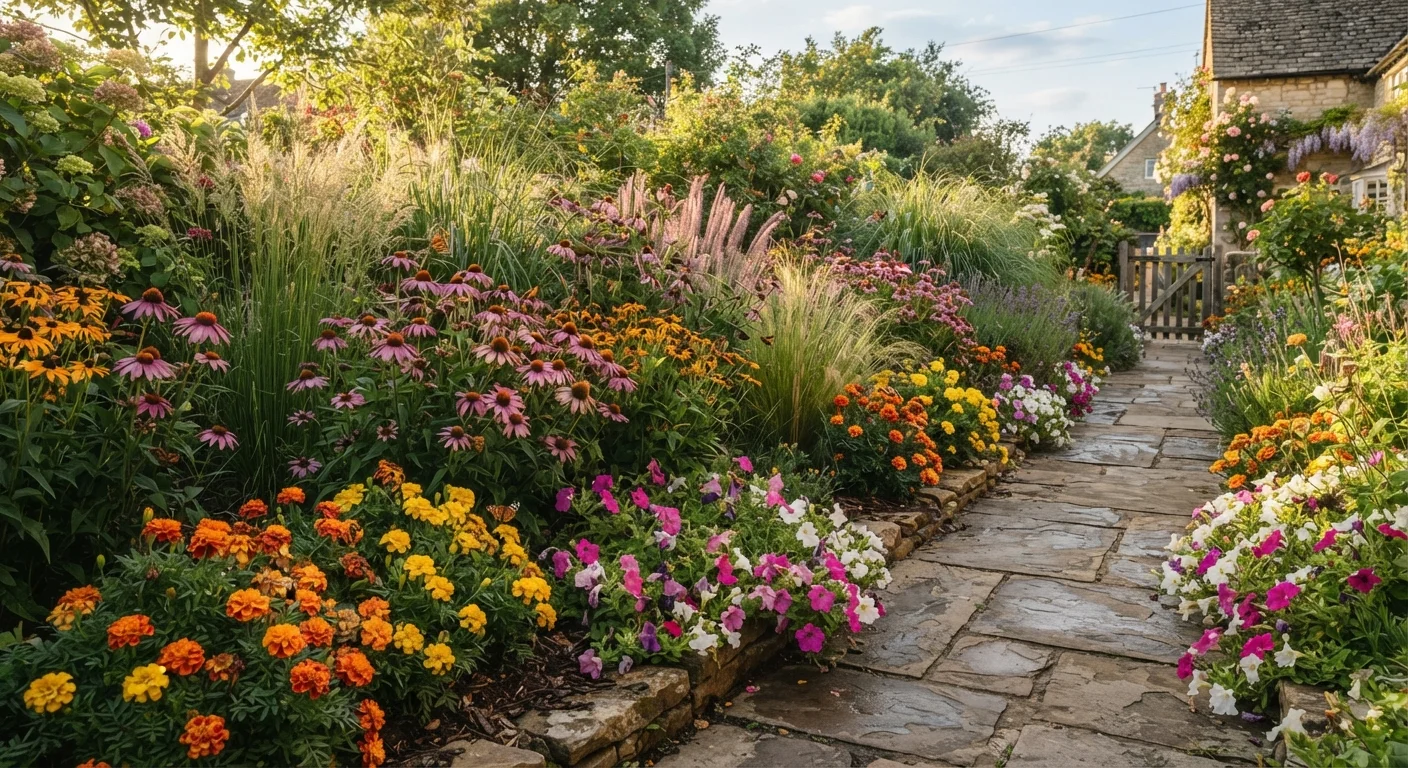
The distinction between perennials and annuals comes down to life cycle. Annuals germinate, flower, set seed, and die within a single growing season. Popular examples include zinnias, impatiens, and marigolds. Perennials, by contrast, die back to their root systems at the end of the season but re-emerge each spring - think coneflowers (Echinacea), black-eyed Susans, and ornamental grasses.
A third category worth noting is biennials (foxglove, hollyhock), which complete their life cycle over two years - flowering in the second year before dying. They behave somewhere between the two main groups and are worth considering for mid-border interest.
Understanding your USDA plant hardiness zone is foundational before purchasing perennials. A plant labeled a perennial in Zone 8 may not survive a Zone 5 winter, effectively becoming an annual in colder climates. Check the USDA Plant Hardiness Zone Map before committing to any perennial selection.
Perennials vs. Annuals: A Side-by-Side Comparison
Both plant types bring genuine value to a garden, but they perform differently across the criteria most homeowners care about. Use the table below to weigh your priorities.
| Perennials | Annuals | |
|---|---|---|
| Lifespan | Returns each year from roots | One growing season only |
| Upfront cost | Higher per plant | Lower per plant |
| Long-term cost | Lower - no annual replanting | Higher - purchased every season |
| Bloom duration per season | Often 4-8 weeks | Continuous until frost |
| Design flexibility | Committed; slow to change | Easy to change each year |
| Establishment effort | Higher - 1-2 seasons to mature | Minimal - blooms quickly after transplant |
| Wildlife value | Generally higher for native species | Varies; some attract pollinators |
| Best use | Structure, backbone plantings | Gap-filling, containers, seasonal color |
One nuance the table doesn't capture: annuals often bloom longer within their single season than many perennials do. A perennial coneflower may bloom for four to six weeks; a well-deadheaded annual petunia can bloom continuously from transplant to first frost. This matters significantly when planning for curb appeal or entertaining spaces.
The Case for Building Around Perennials
Perennials are the architectural layer of a garden. Once established - typically after the second growing season - they require far less intervention than annuals. Many spread naturally, filling gaps over time and reducing bare soil that invites weeds.
From a cost perspective, perennials carry a higher upfront price per plant, but that investment amortizes over many years of regrowth. A single clump of daylilies, for example, can be divided every three to four years to create additional plants at no extra cost.
Perennials also tend to support local ecosystems more robustly. Many native perennials - coneflowers, milkweed, Joe Pye weed - provide nectar and habitat across multiple seasons. See our guide to native plants for a deeper look at building a resilient, regionally appropriate landscape.
Divide Perennials to Multiply Your Garden
Most clump-forming perennials - such as hostas, daylilies, and ornamental grasses - benefit from division every three to five years. Dividing in early spring or fall when temperatures are cooler reduces transplant stress. Each divided section can fill a new area of your garden or be shared with neighbors, effectively expanding your planting at no additional cost.
For guidance on keeping the soil beneath your perennial beds healthy, our article on what's happening beneath your garden explains the biology that supports strong root development year after year.
Where Annuals Earn Their Place
Annuals shine wherever you want reliable, sustained color without the wait for establishment. They're especially useful for filling gaps while young perennials are still maturing - a strategy sometimes called the "plant, wait, fill" approach.
They also give gardeners a low-stakes way to experiment. If a color combination doesn't work this season, you simply choose differently next year. This flexibility is harder to achieve with perennials, which may take two or three years to show their true form and spread.
Annuals are particularly well-suited to containers and pots, where the restricted root zone suits their faster, more intensive growth habit. Our container gardening guide covers how to combine annuals effectively in small-space plantings for season-long impact.
Designing a Garden That Uses Both
A practical approach is to think in layers. Use perennials to establish the garden's structure - its height variations, seasonal rhythm, and ecological function. Then weave annuals into the foreground or gaps to maintain continuous color and visual interest.
A simple framework:
- Back border: Tall perennials (ornamental grasses, rudbeckia, asters) that anchor the bed and return reliably each year.
- Mid-border: Medium perennials (salvia, coreopsis, peonies) for seasonal bloom succession.
- Front edge and gaps: Annuals (lobularia, portulaca, begonias) for non-stop color and textural variety.
Mulching between plants reduces weeding time and conserves moisture across the entire bed. Our guide to mulching garden beds explains how to apply mulch at the right depth to protect both perennial root systems and annual transplants.
For a month-by-month planting and care schedule that incorporates both plant types, consult our seasonal garden calendar to keep maintenance tasks organized through the year.