

Key Takeaways
- Native plants are adapted to local soils and climate, often requiring less watering and fertilizing than non-natives.
- They support critical wildlife including native bees, butterflies, and birds that depend on specific plant relationships.
- Establishing a native garden can require patience - some species take two to three years to mature.
- Local sourcing matters: plants sold as 'native' may not be genetically suited to your specific region.
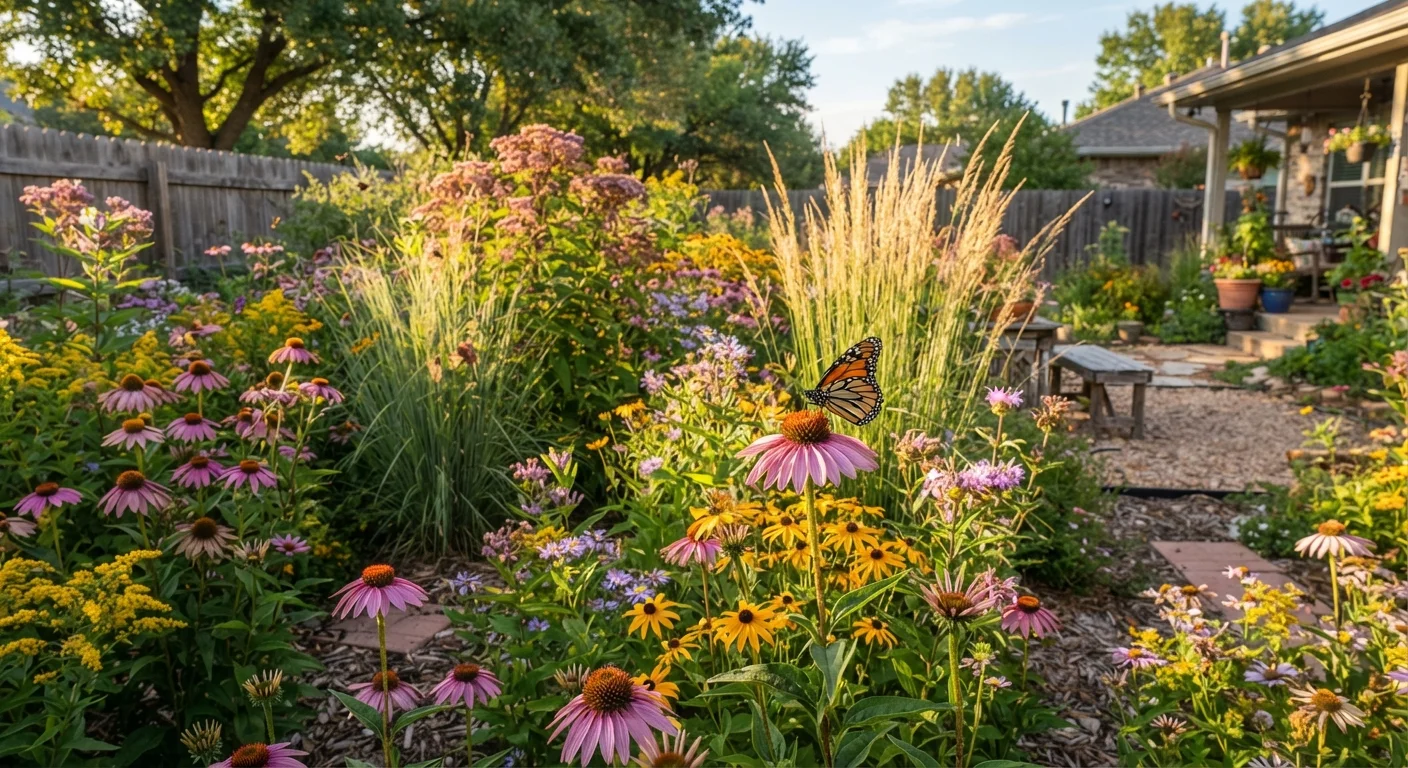
- Native landscaping can coexist with aesthetic goals, blending into designed outdoor spaces with the right planning.
Reduced water needs after establishment
Native plants are adapted to regional rainfall patterns and typically require little to no supplemental irrigation once their root systems are established, usually after one to two growing seasons.
Supports local pollinators and wildlife
Native bees, monarch butterflies, and songbirds rely on specific native plant species for food and reproduction. Replacing even a portion of a lawn with natives can meaningfully improve local biodiversity.
Lower fertilizer and pesticide dependency
Because these plants evolved alongside local soil microbiomes and pest populations, they tend to be naturally resilient - reducing both the cost and environmental impact of chemical inputs.
Greater climate and drought resilience
Deep root systems common in native prairie and woodland species improve soil water retention and help plants endure heat waves and dry spells that stress non-adapted cultivars.
Improves stormwater management
The extensive root networks of native plants increase soil permeability, reducing surface runoff and the erosion and nutrient pollution that come with it.
Slow establishment in the first one to two years
Many natives put energy into root development before producing significant above-ground growth, which can make a new planting look sparse or weedy during the first season or two.
Sourcing truly local genotypes is difficult
Plants labeled 'native' at garden centers are often grown from seed sourced far outside your region. These genetically mismatched plants may survive but provide less ecological value than locally sourced stock.
Neighbor and HOA perception challenges
A naturalistic planting style can clash with neighborhood norms around lawn maintenance. Without deliberate design cues - edged borders, signage, defined paths - native gardens may be perceived as neglected.
Requires upfront research and plant knowledge
Selecting the right plants for your specific ecoregion, soil type, and microclimate demands more initial homework than buying widely available ornamentals from a standard nursery display.
Some natives can spread aggressively
Certain native species, particularly some grasses and rhizomatous perennials, can spread beyond intended areas and outcompete other plants in the garden if not managed appropriately.
Our Verdict
Native plants offer genuine ecological and practical advantages - lower long-term resource demands, stronger wildlife support, and greater climate resilience - that non-native landscapes typically cannot match. That said, they require upfront research, patient establishment, and a willingness to rethink what a 'tidy' yard looks like. For most American homeowners, the benefits well outweigh the challenges.
Homeowners who want a lower-maintenance, ecologically meaningful yard and are willing to invest time in the establishment phase.
What 'Native' Actually Means
A native plant is one that evolved naturally in a specific region over thousands of years - without human introduction. The term is regional, not national: a plant native to the tallgrass prairies of Illinois may be as foreign to a Pacific Northwest garden as any import from Europe. This distinction matters because the ecological benefits of native planting depend on local plant-animal relationships that have developed over millennia.
Before selecting plants, identify your ecoregion using resources from your state's cooperative extension service or the U.S. Department of Agriculture's plant database. These tools help you distinguish between broadly distributed species and those that are genetically well-suited to your specific county or watershed. For a deeper understanding of why soil conditions shape which natives thrive in your yard, see our guide on what's happening beneath your garden.
The Real Advantages of Going Native
Once established, native plants tend to look after themselves in ways that non-natives simply cannot. Because they've spent thousands of years adapting to local rainfall patterns, frost cycles, and soil chemistry, they generally need less supplemental irrigation, fewer soil amendments, and little to no chemical pest control.
Reduced water needs after establishment
Native plants are adapted to regional rainfall patterns and typically require little to no supplemental irrigation once their root systems are established, usually after one to two growing seasons.
Supports local pollinators and wildlife
Native bees, monarch butterflies, and songbirds rely on specific native plant species for food and reproduction. Replacing even a portion of a lawn with natives can meaningfully improve local biodiversity.
Lower fertilizer and pesticide dependency
Because these plants evolved alongside local soil microbiomes and pest populations, they tend to be naturally resilient - reducing both the cost and environmental impact of chemical inputs.
Greater climate and drought resilience
Deep root systems common in native prairie and woodland species improve soil water retention and help plants endure heat waves and dry spells that stress non-adapted cultivars.
Improves stormwater management
The extensive root networks of native plants increase soil permeability, reducing surface runoff and the erosion and nutrient pollution that come with it.
The ecological case is equally compelling. Native plants form the base of local food webs. A native oak, for example, supports hundreds of caterpillar species - the primary food source for most North American songbirds raising young. Non-native ornamentals often provide none of this. Pairing natives with thoughtful companion planting can further amplify these benefits; companion planting strategies can extend the growing season and attract beneficial insects when grounded in evidence rather than folklore.
The Honest Drawbacks to Consider
Native gardening isn't without friction. The transition from a conventional lawn or ornamental bed to a native landscape takes planning, and the early stages can test your patience. Here's what to expect going in:
Slow establishment in the first one to two years
Many natives put energy into root development before producing significant above-ground growth, which can make a new planting look sparse or weedy during the first season or two.
Sourcing truly local genotypes is difficult
Plants labeled 'native' at garden centers are often grown from seed sourced far outside your region. These genetically mismatched plants may survive but provide less ecological value than locally sourced stock.
Neighbor and HOA perception challenges
A naturalistic planting style can clash with neighborhood norms around lawn maintenance. Without deliberate design cues - edged borders, signage, defined paths - native gardens may be perceived as neglected.
Requires upfront research and plant knowledge
Selecting the right plants for your specific ecoregion, soil type, and microclimate demands more initial homework than buying widely available ornamentals from a standard nursery display.
Some natives can spread aggressively
Certain native species, particularly some grasses and rhizomatous perennials, can spread beyond intended areas and outcompete other plants in the garden if not managed appropriately.
Check Local Rules Before You Plant
If your neighborhood has HOA restrictions or local ordinances governing lawn appearance, check those rules before converting large areas to native plantings. Some municipalities have begun updating codes to accommodate ecological landscaping, but requirements vary widely by locality. When in doubt, contact your local planning or code enforcement office directly before breaking ground.
If your neighborhood has HOA restrictions or local ordinances governing lawn appearance, check those rules before converting large areas to native plantings. Some municipalities have begun updating codes to accommodate ecological landscaping, but requirements vary widely by locality.
Designing a Native Garden That Actually Works
A successful native landscape starts with observation. Spend time noting which areas of your yard receive full sun versus shade, where water pools after rain, and which spots stay dry. Match plant communities to those microclimates rather than fighting them.
Layer your planting like a natural habitat: tall canopy or understory trees, mid-level shrubs, herbaceous perennials, groundcovers, and grasses. This structure supports diverse wildlife while creating year-round visual interest. Most native perennials behave similarly to the non-native perennials discussed in our guide to planning with perennials and annuals - they return reliably each year and expand over time, reducing the need for replanting.
For homeowners who want to integrate natives into a more structured outdoor living area, the principles in designing cohesive outdoor spaces apply directly - defined edges, intentional pathways, and planting zones keep a naturalistic garden from feeling neglected.
~80%
Of bird species that need insects to raise young
Research by entomologist Doug Tallamy suggests the vast majority of North American terrestrial birds depend on insect protein to feed nestlings, making native host plants critical to bird reproduction.
700+
Caterpillar species supported by native oaks
Studies cited in Tallamy's work indicate that a single native oak tree can support over 700 species of lepidoptera larvae, compared to near zero for many common non-native ornamentals.
30-50%
Potential reduction in yard water use
According to the EPA's WaterSense program, replacing traditional turf and ornamentals with drought-adapted native plantings can significantly reduce outdoor water consumption in many U.S. regions.