

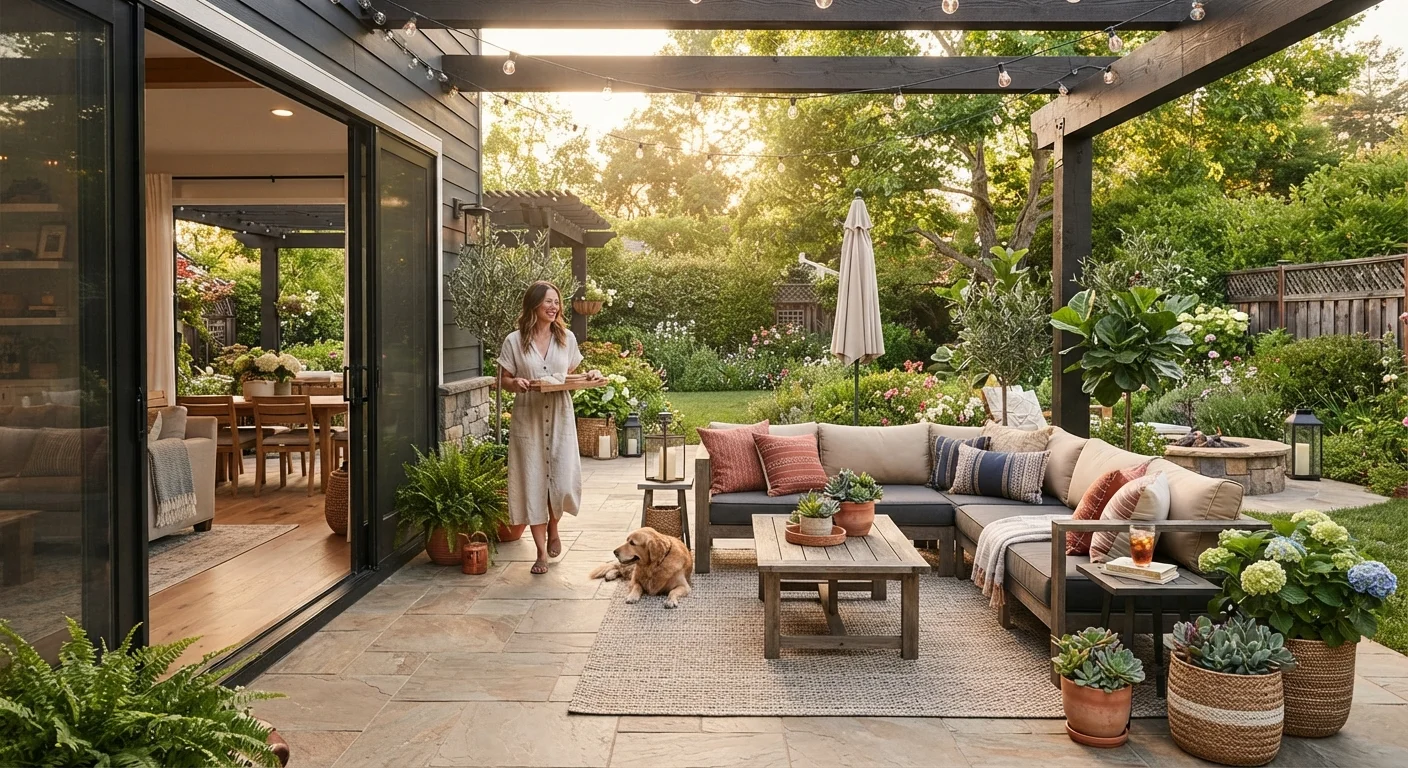
Key Takeaways
- Repeating interior materials and colors outdoors creates a seamless visual connection between spaces.
- Defining distinct zones for dining, lounging, and gardening makes outdoor areas more functional and livable.
- Layering plants with varied heights adds structure, privacy, and year-round interest to any yard.
- Thoughtful lighting extends usability after dark and dramatically improves outdoor ambiance.
- Native and low-maintenance plants reduce upkeep while supporting local ecosystems.
Start With the Connection to Your Interior
The most livable outdoor spaces feel like a deliberate continuation of the home, not an afterthought. Begin by identifying the materials, colors, and style already present inside. If your interior features warm wood tones and neutral upholstery, carry those cues outward - cedar decking, stone pavers in earthy hues, or wicker furniture with tan cushions all echo that palette without mimicking it exactly.
Pay attention to your home's exterior architecture, too. A craftsman-style house pairs well with natural stone paths and low, layered plantings, while a modern home may suit clean-lined concrete or porcelain pavers. For a practical starting point, see our guides on indoor-outdoor flow considerations and home improvement fundamentals to understand how structural decisions inside can affect your outdoor planning.
The transition from door to patio matters enormously. A consistent floor level between an interior room and a deck, or a wide threshold with no lip, signals that the spaces belong together. Even a simple change - like extending the interior tile color to an outdoor doormat zone - reinforces continuity.
Zone Your Space Like a Room
Outdoors, clutter and chaos arise when a yard has no clear purpose. Treat your outdoor area the way an interior designer would treat a great room: identify distinct functional zones, then give each one a defined footprint.
Define each outdoor zone with a distinct ground surface or furniture grouping.
Clear boundaries reduce visual clutter and help each area function more effectively. Without them, furniture drifts and the space feels undefined and underused.
Repeat two or three interior design cues - such as color, material, or texture - in your outdoor furnishings.
Repetition creates cohesion. When the same palette or material language appears inside and out, the eye reads both spaces as part of a unified home.
Layer planting heights from ground-level groundcovers up through mid-height shrubs to taller screening plants.
Layered plantings mimic natural ecosystems, adding visual depth and providing privacy without requiring structures like fences or walls.
Install at least two layers of outdoor lighting - ambient overhead and low path or accent lighting.
Single-source lighting flattens a space and limits after-dark use. Multiple layers create atmosphere and make the area safe to navigate at night.
Design paths to meander slightly rather than cutting straight lines across the yard.
Curved or gently winding paths slow the pace, create a sense of discovery, and make modest yards feel more spacious and interesting.
Common zones include a dining area (typically closest to the kitchen door), a lounging or conversation area, a gardening or planting bed zone, and a utility edge for storage or composting. Even a modest backyard benefits from this logic - the boundaries don't need to be walls. A change in ground material, a low hedge, or a simple arrangement of furniture is enough to signal a shift from one purpose to another.
Vertical layering adds depth without consuming ground space. Trellised climbing plants, raised planters, and tiered garden beds create the sense of enclosure that makes outdoor rooms feel intentional. For space-efficient ideas, explore vertical gardening strategies for small yards.
Choose Plants That Do Structural Work
Plants are the furniture of an outdoor room. A well-placed shrub anchors a corner the way an armchair does indoors; a row of ornamental grasses divides spaces the way a bookcase does. The goal is to choose plants that offer form and structure in addition to seasonal color.
Native Plants Reduce Long-Term Maintenance
Many homeowners choose plants based primarily on appearance, only to find them struggling in local soil or climate conditions. Native species are adapted to regional rainfall, soil types, and temperature swings, which generally translates to less supplemental watering and fewer interventions. Before purchasing plants, check with your local cooperative extension service for regionally appropriate species recommendations.
Perennials form the backbone of a low-maintenance planting plan - they return each year and gradually fill in, reducing replanting costs. Annuals add seasonal color and flexibility. Understanding how to combine these two plant types is key to a garden that looks good year-round; our article on perennials vs. annuals walks through that balance in detail.
Where space is limited, containers offer remarkable versatility. Clustered near a seating area, they frame the space and can be rotated seasonally. See container gardening techniques for guidance on soil, drainage, and plant selection. And when choosing what to grow, consider that native plants typically require less water and upkeep while supporting local pollinators - a practical and ecological win for most American homeowners.
Light, Paths, and the Details That Unify It All
Lighting is what separates an outdoor space that gets used once from one that becomes a nightly habit. Layer sources at different heights: overhead string lights for ambient warmth, path lighting for safety and wayfinding, and accent lights aimed at focal plantings or architectural features. Solar-powered fixtures have improved significantly and work well for path and accent applications.
Paths deserve as much thought as the spaces they connect. A path that meanders slightly - rather than running in a rigid straight line - encourages a slower pace and makes a yard feel larger than it is. Material choice matters: flagstone, gravel, decomposed granite, and brick each carry a different aesthetic and maintenance profile. Confirm local building codes before laying permanent hard surfaces, as some municipalities require permits for substantial paving work.
Finally, the small details - an outdoor rug that anchors a seating area, a consistent planter style throughout, cushions that match an interior accent color - are what make a space feel curated rather than collected. These finishing touches take relatively little investment but signal that the outdoor area was planned with the same care as any room inside.