

Key Takeaways
- Companion planting pairs plants to encourage mutual benefits like pest control or pollination support.
- Some combinations - like the Three Sisters - have solid practical track records and measurable benefits.
- Many commonly cited pairings rely more on folk tradition than on peer-reviewed evidence.
- Soil health, water, and sunlight still matter far more than companion pairings for most garden outcomes.
- Thoughtful plant combinations can support biodiversity and reduce chemical inputs even when benefits are modest.
Companion Planting
Companion planting is the practice of growing different plant species in close proximity on the theory that they can benefit one another. These supposed benefits include repelling pests, attracting pollinators, improving soil health, or boosting yields. It's a widespread gardening strategy rooted in centuries of observation and, more recently, some scientific study.
Mechanisms proposed include allelopathy (one plant chemically suppressing another's growth or pests), nitrogen fixation by legumes, and habitat provision for beneficial insects - each with varying levels of research support.
The Core Idea Behind Companion Planting
At its simplest, companion planting is about intentional plant neighborhoods. Rather than growing a single crop in isolation, gardeners mix species with the goal of creating conditions where each plant helps the other thrive. The benefits most often claimed include natural pest deterrence, improved pollination, smarter use of space, and enhanced soil fertility.
The concept isn't new. Indigenous farming traditions across North America and beyond developed multi-crop planting systems long before modern horticulture gave them scientific names. The Three Sisters - corn, beans, and squash - remains the most cited example: each plant serves a role that supports the others structurally, nutritionally, and environmentally. This combination reflects genuine agricultural wisdom refined across generations.
When thinking about how to structure your garden beds, companion planting intersects naturally with longer-term planning. Understanding which plants return year after year shapes which combinations make sense. Our article on perennials vs. annuals can help you build a framework before adding companion strategies on top.
Allelopathy Works Both Ways
Some plants suppress their neighbors rather than help them - a process called allelopathy. Fennel is widely noted for inhibiting nearby vegetables, and black walnut trees release juglone, a compound harmful to many plants. Before adding a new species to an existing bed, it's worth checking whether it's known to interfere with what you've already planted.
Where the Evidence Is Strongest
Research supports a handful of companion planting claims more consistently than others. Legumes - beans, peas, clover - genuinely fix atmospheric nitrogen through root-associated bacteria, enriching soil for neighboring plants. This is among the most well-established mechanisms in companion planting and forms the foundation of crop rotation and intercropping practices in agriculture worldwide.
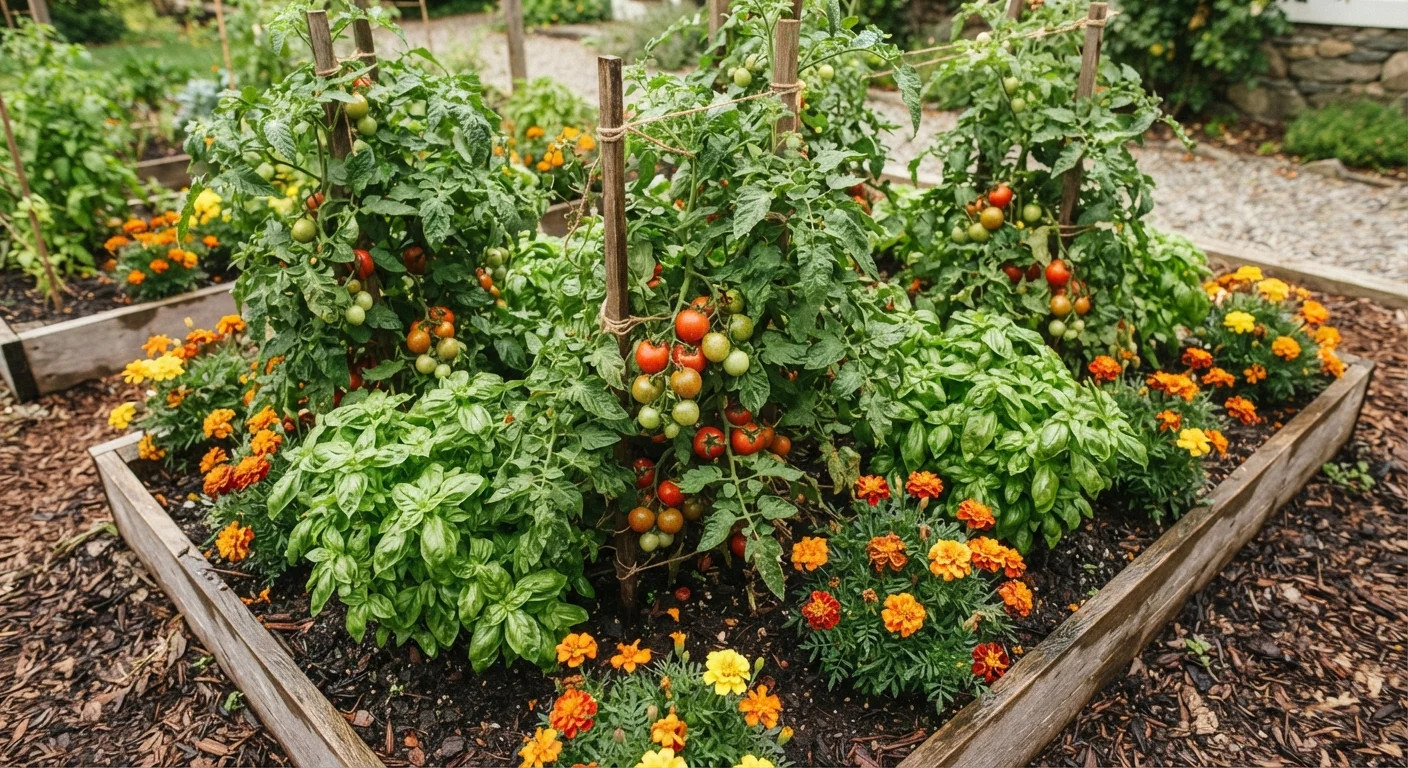
Marigolds (Tagetes species) offer another partially evidence-backed example. When planted densely and turned into the soil, they have been shown in studies to suppress root-knot nematodes - microscopic worms that damage plant roots. Their reputation for repelling aphids and whiteflies above ground is less consistently confirmed, but attracting beneficial predatory insects is plausible and observed in practice.
Aromatic herbs - basil, dill, fennel (carefully placed), and others - are thought to confuse or deter certain insects. The science here is mixed. Some compounds in aromatic plants do affect insect behavior in laboratory conditions, but field results vary considerably depending on pest species, plant density, and local ecosystem factors.
~80%
Of crop nitrogen from legume fixation
Research published in agricultural journals suggests legumes can derive a substantial portion of their nitrogen needs through symbiotic root bacteria, reducing synthetic fertilizer dependency for neighboring plants.
3,000+
Years of documented multi-crop systems
Archaeological and historical records indicate that polyculture farming - growing multiple crops together - has been practiced across Indigenous American, Asian, and Mediterranean agricultural traditions for millennia.
Varies widely
Pest reduction from companion planting alone
A review of intercropping studies found that pest reduction outcomes depend heavily on the specific pest, plant density, and regional ecosystem - making blanket claims about effectiveness difficult to support.
Where Folk Wisdom Outpaces the Science
Much companion planting lore passes through gardening books and online advice without clear experimental backing. Claims that planting basil next to tomatoes improves tomato flavor, for instance, have not been demonstrated in controlled research. That doesn't necessarily mean the pairing is useless - intercropping basil with tomatoes may still make practical sense for space efficiency - but the flavor benefit shouldn't be stated as fact.
Similarly, many "pest-repelling" pairings are based on anecdotal observation rather than replicated studies. Pest behavior in a real garden is shaped by dozens of variables: regional climate, soil biology, surrounding landscape, and season. A combination that appears effective in one gardener's plot may produce no measurable benefit in another.
This pattern of overstated claims has something in common with garden watering myths - beliefs that feel intuitive but don't always hold up under scrutiny. Our piece on garden watering myths explores how similar assumptions around irrigation can quietly harm plants.
Start With Simple, Low-Risk Pairings
If you're new to companion planting, begin with combinations that offer practical benefits regardless of pest effects - like fast-maturing radishes alongside slow crops, or flowering herbs near vegetable beds to attract pollinators. These pairings provide value through timing and habitat even if the chemical interactions are uncertain.
How to Use Companion Planting Realistically
The most grounded approach treats companion planting as one layer of garden design rather than a guaranteed system. Start with the pairings that have practical logic behind them: grow legumes to build soil nitrogen, place flowering plants to support pollinators, and keep allelopathic plants like fennel away from your vegetable beds.
Think about habitat as much as chemistry. Mixing plant types and heights creates structural diversity that supports beneficial insects and birds - natural pest regulators. This principle aligns well with native plant gardening, where plant diversity is central to ecological function.
Maintain realistic expectations. No companion arrangement will overcome poor soil, insufficient water, or inadequate sun. Address those foundational needs first, then experiment with intercropping as an additional strategy. Document what you observe over seasons - your own garden, in your specific climate and soil, is the most relevant laboratory you have.
For gardeners working with limited ground space, combining companion planting with vertical growing techniques can multiply diversity without crowding root zones.