

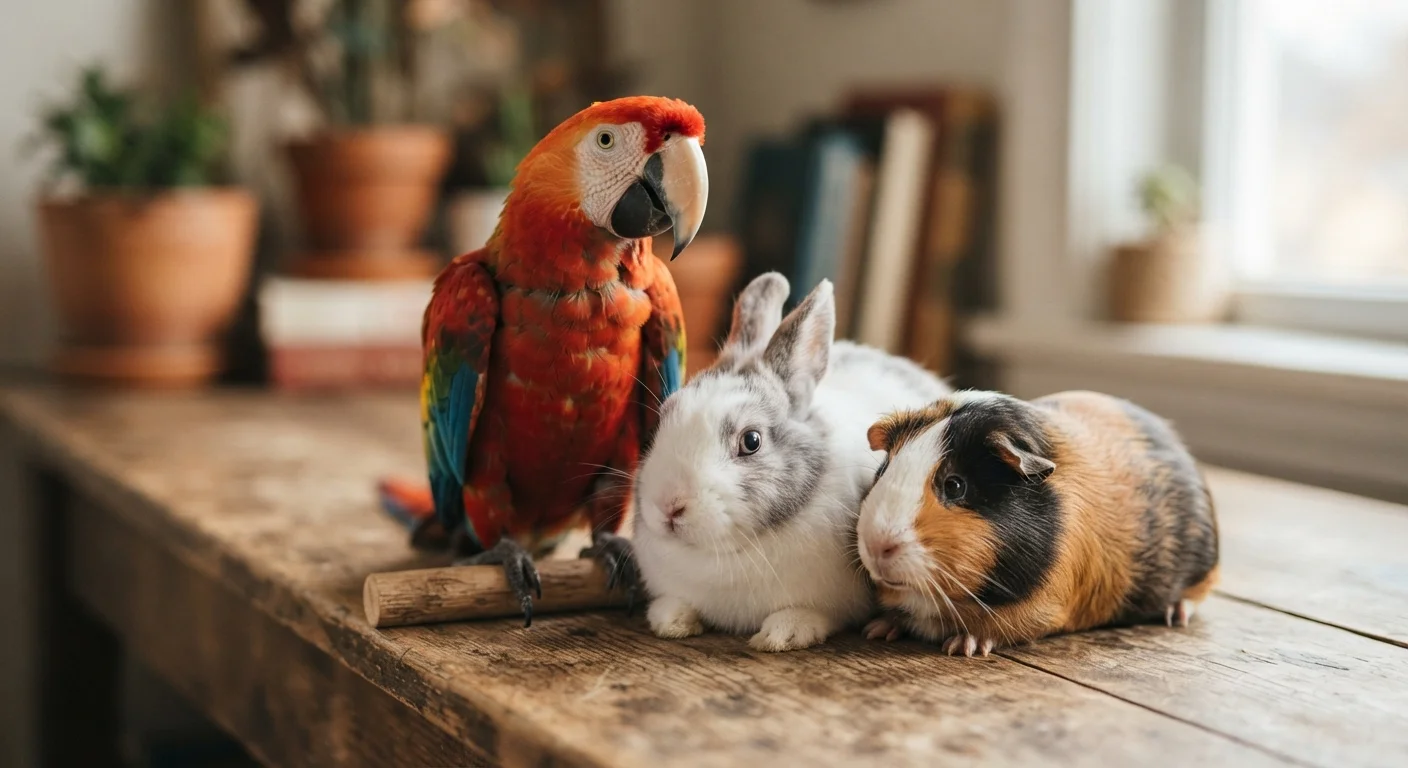
Key Takeaways
- Rabbits, guinea pigs, and parrots can all learn behaviors through consistent, reward-based training.
- Each species has distinct cognitive strengths; matching methods to the animal improves results.
- Short, frequent training sessions work far better than long, infrequent ones for small pets.
- Positive reinforcement is the most humane and effective approach across all three species.
- Stress signals like freezing, hiding, or vocalizing mean training should pause immediately.
Small Pets Are More Trainable Than You Think
Many pet owners assume training is reserved for dogs. In reality, rabbits, guinea pigs, and parrots are all capable learners - each with their own cognitive style, motivations, and limits. Understanding those differences is what separates frustrating attempts from genuine progress.
The foundation for all three species is the same: positive reinforcement. Rewarding desired behaviors with food, praise, or enrichment makes those behaviors more likely to repeat. Punishment, on the other hand, tends to erode trust without teaching anything useful - and with prey animals like rabbits and guinea pigs, fear can set training back significantly.
If you're working with a recently adopted animal, it's also worth reviewing what to expect in the first week before jumping into formal training. A settled, bonded pet learns far more readily than one still adjusting to its environment.
Start with trust-building, not tasks
Before any small pet will engage in training, it needs to feel safe around you. Spend time near the enclosure without forcing interaction. Let your rabbit or guinea pig approach on its own terms; offer treats from an open palm. With parrots, allow the bird to step onto your hand voluntarily before attempting any cued behavior.
Rushing past this stage is the most common training mistake. Animals that associate your presence with calm, positive experiences become far more cooperative learners. Budget at least one to two weeks of consistent, low-pressure interaction before introducing any formal cues.
Animals that feel safe around you become far more cooperative learners.
Use species-appropriate rewards
Reward selection matters enormously. For rabbits, small pieces of leafy greens, herbs like cilantro or basil, or a thin slice of apple are highly motivating without disrupting their digestive balance. Avoid sugary treats as primary training rewards.
Guinea pigs respond well to small vegetable pieces - bell pepper, cucumber, or a tiny amount of carrot. Since guinea pigs graze constantly, you may need to withhold the specific reward item for a short period before training to make it feel novel enough to work for.
Parrots are typically motivated by favorite seeds, small nut fragments, or pieces of fruit. Many certified parrot trainers also use brief, enthusiastic verbal praise as a secondary reinforcer once conditioned - useful for situations where food delivery is inconvenient.
Mismatched rewards are one of the most overlooked reasons training stalls.
Keep sessions short and frequent
Small pets have shorter attention spans and fatigue more quickly than dogs. Three to five minutes per session is a reasonable ceiling for rabbits and guinea pigs. Parrots can handle slightly longer sessions - up to ten to fifteen minutes - but benefit from frequent natural stopping points and enrichment breaks.
Frequency matters more than duration. Daily five-minute sessions will produce better results than a single thirty-minute session once a week. Training at the same time each day can also help - many animals anticipate the routine and arrive more focused and ready to engage.
Daily short sessions consistently outperform infrequent marathon training attempts.
Teach one behavior at a time
Rabbits can learn to navigate obstacle courses, come when called by name, and use a designated litter area reliably - but not all at once. Introduce a single behavior, reinforce it until it's stable, then layer in the next. Moving too quickly introduces confusion and can frustrate both pet and owner.
For guinea pigs, foundational behaviors like targeting (touching their nose to a finger or small stick), spinning in place, or moving through a simple tunnel are achievable and genuinely enriching. Parrots can learn an impressive range of behaviors - stepping up, retrieving objects, identifying colors - but each should be fully shaped before the next is introduced.
Layering new skills before old ones are stable is a leading cause of training regression.
Read and respect stress signals
Every training session should include active observation of your pet's body language. Rabbits signal stress by thumping, freezing, or fleeing. Guinea pigs may teeth-chatter, purr defensively, or attempt to hide. Parrots may pin their pupils rapidly, fluff up, or vocalize with alarm calls.
Any of these signals means the session should end calmly and immediately - not after one more try. Pushing through visible stress doesn't build resilience; it erodes trust. A pet that associates training with discomfort will become increasingly difficult to work with over time. Always end on a neutral or positive note, even if that simply means offering a treat and stepping away.
Pushing through visible stress erodes trust and makes future training harder.
Understand the limits of each species
Honest expectations are part of humane training. Guinea pigs are social, curious animals but have modest working memory compared to parrots. Complex multi-step behaviors are unlikely to be achievable, and that's perfectly fine - simple, enriching interactions are valuable on their own terms.
Rabbits are surprisingly clever and can learn more than most owners expect, but they're also independent-minded. A rabbit that chooses not to engage on a given day is communicating something worth respecting. Parrots, particularly larger species, have cognitive abilities closer to young children in some domains, but they're also long-lived animals with complex social needs. Training should complement enrichment, daily care routines, and social interaction - not replace them.
Honest expectations lead to better outcomes and a stronger bond with your pet.
Putting It All Together
Training small pets is less about commanding them and more about communicating with them. Each session builds trust and mental stimulation that benefits their overall well-being - and yours. Keep notes on what works, stay patient with setbacks, and always end on a positive moment your pet can feel good about.
A clicker can help mark behaviors precisely
A small handheld clicker - used in classical clicker training - can help you mark the exact moment your pet performs a desired behavior, before you deliver the reward. This precision is especially useful with parrots and rabbits, where the timing gap between behavior and treat delivery might otherwise cause confusion. Pair the click with a reward consistently before using it in training.
For a broader view of daily habits that support your pet's learning and health, see the everyday care routines most owners overlook. Curious how this compares to feline learning? Training cats works differently - but many of the same patience principles apply.
This article is for general informational and educational purposes only. Consult a veterinarian or certified animal behaviorist for guidance specific to your pet's health, temperament, or behavioral concerns.