

Key Takeaways
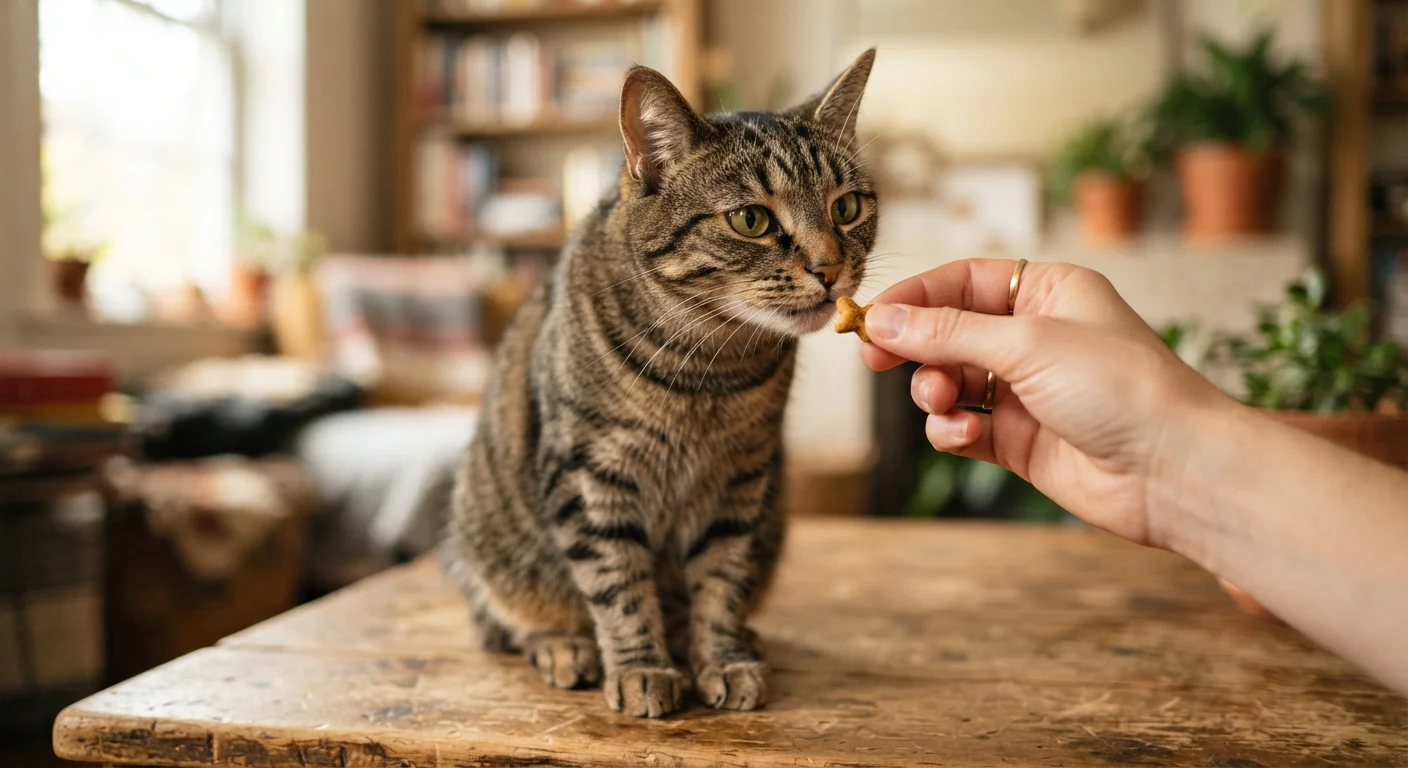
- Cats learn through operant conditioning, just like dogs - rewards drive reliable behavior change.
- Short, frequent training sessions of two to five minutes work best for feline attention spans.
- Punishment-based methods are ineffective with cats and can damage the human-animal bond.
- Many cats can learn practical behaviors like sit, come, and carrier entry on cue.
- Timing of the reward is critical - reinforcement must follow the behavior within seconds.
Why the 'Untrainable Cat' Myth Persists
The idea that cats simply cannot be trained is one of the most widespread misconceptions in pet ownership. It stems largely from comparing cats to dogs - a comparison that misunderstands both species. Dogs have been selectively bred for thousands of years to respond to human direction. Cats, domesticated under very different pressures, retained far more behavioral independence. That independence is not the same as an inability to learn.
Animal behavior researchers recognize that cats are capable of operant conditioning - the process by which an animal learns to associate a behavior with a consequence. The challenge isn't feline intelligence; it's that cats are highly motivated by their own internal drives and will not work for praise alone the way many dogs will. Understanding this distinction is the first step toward effective, humane cat training. For a broader look at how reward-based methods work across species, see our guide to positive reinforcement in pet training.
Myth
Cats are too independent to be trained - they just don't care about pleasing people.
Fact
Cats are motivated by reward, not by social approval. Training that uses food or play instead of praise can be highly effective.
Unlike dogs, cats did not evolve as pack animals that defer to a social hierarchy. They don't experience a drive to please their owner the way many dogs do. However, this doesn't mean they won't learn - it means the training currency must change. High-value food rewards (small pieces of cooked chicken, commercial treats with strong aromas) tap into a cat's natural motivation far more reliably than verbal affirmation alone.
Myth
Spraying a cat with water is an effective way to stop unwanted behavior.
Fact
Spray bottles suppress behavior in the moment but do not teach the cat what to do instead, and they can erode trust.
Punishment-based methods - including spray bottles, loud noises, or physical corrections - may startle a cat into stopping an action briefly, but they do not communicate what behavior is expected. Cats frequently learn to avoid the behavior only when the owner is present, rather than stopping altogether. More importantly, repeated aversive experiences can make cats fearful or avoidant of the people delivering them, undermining the relationship that makes training possible in the first place.
Myth
If a cat doesn't respond during training, it's being stubborn or spiteful.
Fact
Lack of response usually signals that the reward isn't motivating enough, the session is too long, or the cat is stressed or unwell.
Cats do not experience spite in the human sense - behavioral non-compliance is nearly always a communication about something in the environment or training approach. Common causes of poor training response include using low-value rewards, sessions timed when the cat is already full or tired, a distracting environment, or underlying discomfort. Adjusting one variable at a time - starting with reward type and session length - resolves most training plateaus.
Myth
You can only train kittens; adult and senior cats cannot learn new behaviors.
Fact
Cats can learn at any age. Adult cats may simply require slightly longer acclimation periods and more consistent repetition.
The brain's capacity for associative learning persists well into adulthood across mammalian species, and cats are no exception. Shelter organizations and veterinary behaviorists regularly work with adult and senior cats to modify entrenched behaviors or introduce new ones. Older cats may have stronger existing habits that take more sessions to override, but the fundamental learning mechanism remains intact throughout their lives.
What Cats Can Actually Learn - and How to Teach Them
Practical cat training focuses on behaviors that improve safety, reduce stress, and strengthen the bond between cat and owner. Common teachable behaviors include responding to a name, sitting on cue, entering a carrier voluntarily, and coming when called. More advanced cats have learned to high-five, navigate obstacle courses, and use specific objects on command - skills demonstrated regularly in shelter enrichment programs and professional animal training environments.
The most effective method is clicker training combined with high-value food rewards. A clicker (a small handheld device that produces a distinct sound) marks the exact moment the correct behavior occurs, giving the cat a precise signal for what earned the reward. Sessions should be kept to two to five minutes and conducted before meals when the cat is motivated by food. Consistency, patience, and correct timing - rewarding within one to two seconds of the behavior - are non-negotiable.
Avoid Punishment-Based Techniques
Methods such as spray bottles, loud startling sounds, or physical corrections may temporarily interrupt a behavior but consistently fail to produce lasting change in cats. These approaches can induce chronic stress, cause fearful hiding, and damage the trust between cat and owner - making future training significantly harder. Reward-based methods are both more humane and more effective.
Scratching furniture, litter box avoidance, and similar unwanted behaviors often have training solutions, though medical causes should always be ruled out first. Our article on litter box problems in cats explains how to tell the difference. Once you've built a foundation, you can also begin redirecting scratching to appropriate surfaces using the same positive techniques.
Environment matters too. Cats allowed only indoor access may have more sustained focus during training, while cats with outdoor exposure bring different behavioral baselines. If you're weighing those trade-offs, our piece on indoor vs. outdoor cats covers the research. And if you're curious how feline training compares to work with other small animals, training small pets like rabbits and parrots offers a useful contrast.